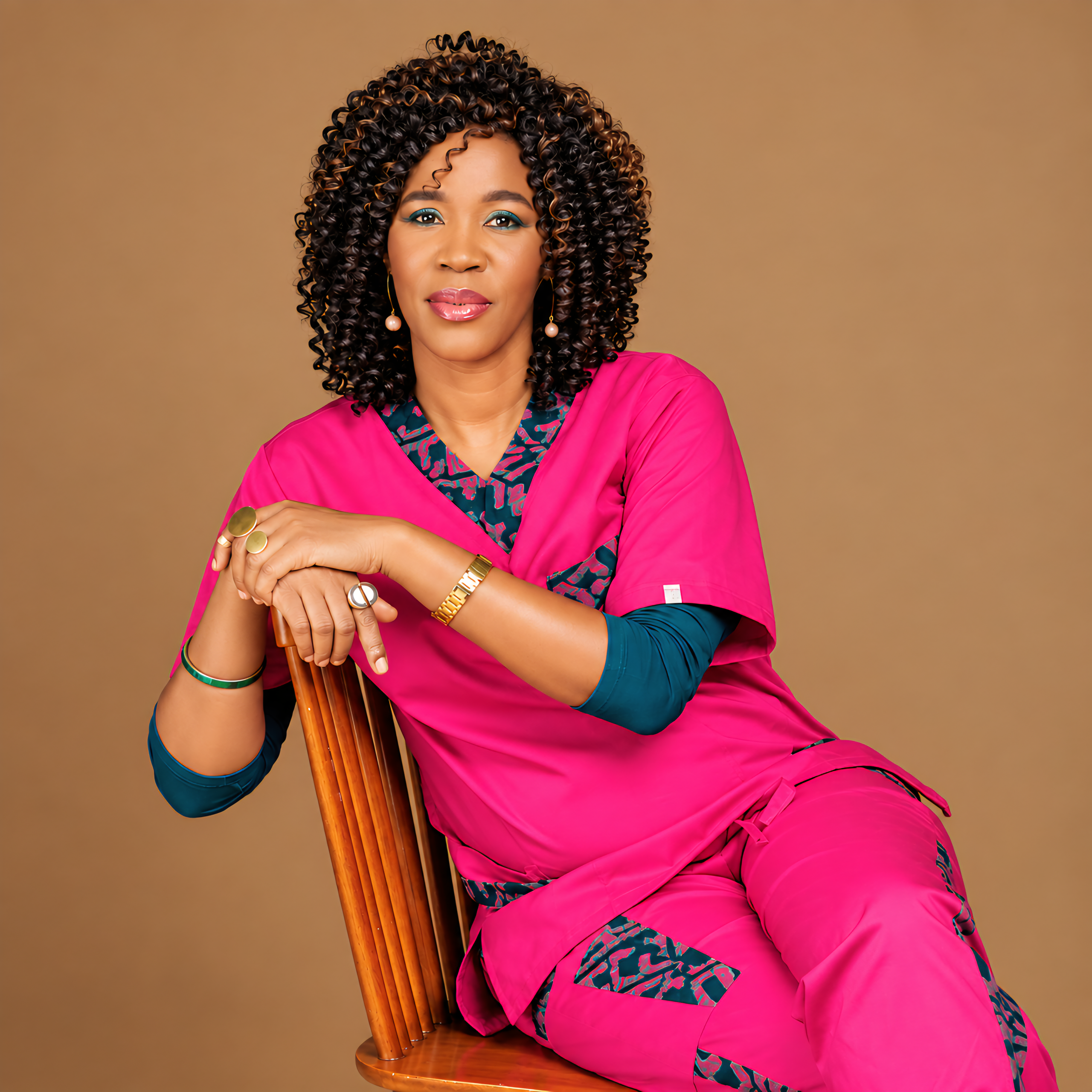
There are some careers that are impressive because of the positions they reach.
There are others that become extraordinary because of the barriers they break.
And then there are careers that do something even more powerful: they create a pathway for other people to follow.
Dr. Miriam Mutebi’s story belongs in that final category.
A Consultant Breast Surgical Oncologist, Assistant Professor, clinical epidemiologist, health-systems researcher, author and global cancer advocate, Dr. Mutebi has built a career around a deceptively simple question:
How can we make cancer care better, more accessible and more equitable for African patients?
Her answer has taken her from the operating theatre to international cancer organisations, from medical education to health policy, and from pioneering surgery to continental advocacy.
She became Kenya’s first female breast surgeon. She helped introduce advanced breast reconstruction to East Africa. She has led major African cancer organisations, served on international boards and commissions, mentored women surgeons and received the 2024 American Society of Clinical Oncology Humanitarian Award.
And in 2026, she added another dimension to her work: author.
Her book, Stuff I’d Tell My Sister: On Sisterhood, Surgery & Breast Cancer, brings together the human stories and lessons accumulated through more than a decade of caring for women with breast cancer. Her own announcement describes it not as a medical textbook, but as the book she wished she could place in the hands of women arriving at her clinic frightened and uncertain.
This is the story of a woman who has refused to see medicine merely as a profession.
For Dr. Miriam Mutebi, medicine is service, advocacy, leadership and hope.
The Beginning: A Young Woman Searching for Her Calling
Dr. Mutebi’s journey into medicine was not necessarily predetermined.
Growing up in Nairobi, she explored several possibilities before settling on medicine. She has spoken about considering careers including law, pharmacy, architecture, writing and medicine.
That exploration is important because it reminds us that extraordinary careers do not always begin with certainty.
Sometimes they begin with curiosity.
Sometimes the person who eventually changes an industry starts out simply trying to discover where she belongs.
Medicine ultimately won.
And it became much more than a career.
It became her platform for serving women, strengthening health systems and challenging inequity.
Building the Academic Foundation
Dr. Mutebi earned her Bachelor of Medicine and Bachelor of Surgery (MBChB) from the University of Nairobi in 2004.
She subsequently completed her Master of Medicine in Surgery at Aga Khan University in 2012. She then undertook specialist training in Breast Surgical Oncology at the University of Cape Town’s Groote Schuur Hospital, including training in plastics and reconstruction.
Her academic journey continued internationally through the Mammadi Soudavar International Surgical Oncology Fellowship at Memorial Sloan Kettering Cancer Center in New York, followed by graduate research training.
She also earned a Master of Science in Clinical Epidemiology and Health Systems Research from Weill Cornell University, where her work focused on understanding barriers preventing women in Africa from receiving timely cancer diagnosis and treatment.
This combination of clinical medicine, surgery, epidemiology and health-systems research would become one of the defining characteristics of her career.
She did not simply want to understand how to treat cancer.
She wanted to understand why some women never reached treatment in time.
That distinction changed the trajectory of her work.
Becoming Kenya’s First Female Breast Surgeon
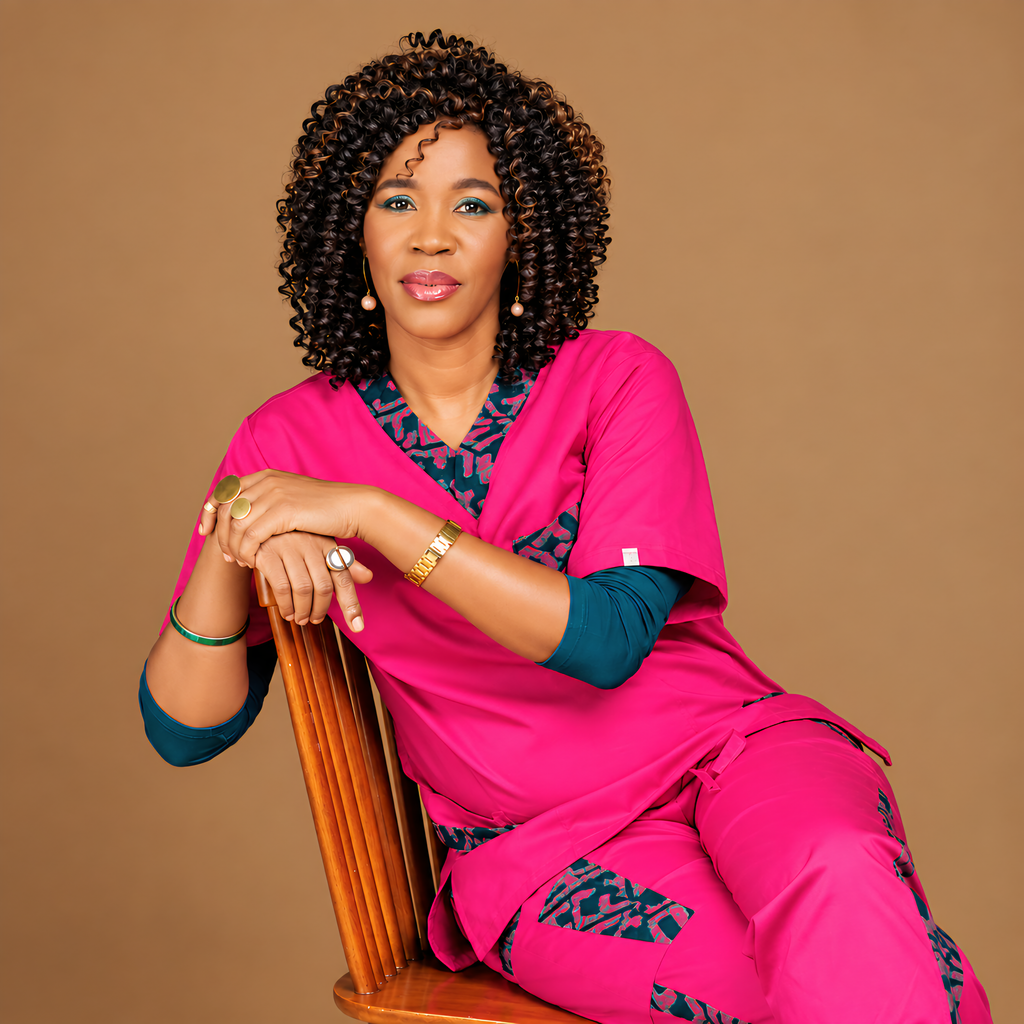
One of Dr. Mutebi’s most significant professional milestones was becoming Kenya’s first female breast surgeon.
Surgery has historically been a male-dominated specialty.
Dr. Mutebi has spoken candidly about some of the attitudes she encountered during her training, including questions that reflected doubts about whether women could combine surgical careers with motherhood and other responsibilities.
But instead of allowing those assumptions to define her career, she used them as motivation.
She has described the experience of being the first woman in her specialty as carrying an additional responsibility:
“With being the first, in any position, there is additional pressure on yourself to ensure that you are not the last.”
That may be one of the most powerful descriptions of leadership associated with her career.
Being first was never the destination.
It was the beginning of a responsibility.
Breaking the “First Woman” Barrier
Dr. Mutebi’s story is particularly significant because she did not merely enter a male-dominated profession.
She helped demonstrate that women can lead at the highest levels of surgical practice, research and health policy simultaneously.
She has become a visible advocate for women in surgery and gender equity in global oncology.
As co-founder of the Pan African Women’s Association of Surgeons (PAWAS), she has helped create a platform dedicated to mentoring women surgeons and strengthening transformative leadership across Africa.
Her philosophy is bigger than representation.
It is about building capacity.
Because representation without opportunity is incomplete.
And opportunity without mentorship can still leave talented people isolated.
Dr. Mutebi has worked to change both.
Bringing Advanced Breast Reconstruction to East Africa
In 2019, Dr. Mutebi, alongside colleagues at Aga Khan University Hospital, pioneered the introduction of the Deep Inferior Epigastric Perforator (DIEP) flap breast reconstruction technique in East Africa.
The procedure can allow breast reconstruction using a patient’s own tissue following mastectomy.
Its introduction represented more than a surgical achievement.
It demonstrated what becomes possible when African specialists combine international training with local innovation.
For breast cancer survivors, treatment should not necessarily end when the tumour is removed.
There is also the question of healing.
Of identity.
Of confidence.
Of quality of life.
Of becoming comfortable in one’s body again.
Dr. Mutebi’s work recognises the patient beyond the disease.
The Researcher Behind the Surgeon
Dr. Mutebi is not only a clinician.
She is a clinical epidemiologist and health-systems researcher whose work examines barriers to cancer care for women in sub-Saharan Africa.
Her academic record includes research on breast cancer awareness, treatment outcomes, quality of life, cancer policy and health equity.
She has contributed to research addressing breast cancer education in resource-constrained environments and has co-authored work on optimising cancer care across sub-Saharan Africa.
She has also contributed to major global conversations around gender and cancer research.
Her work is therefore not confined to the operating room.
She is asking questions about the system surrounding the operating room.
Who gets diagnosed?
Who gets treated?
Who gets left behind?
Why do they get left behind?
And what can we change?
Those questions are at the heart of her research.
A Voice for African Cancer Care
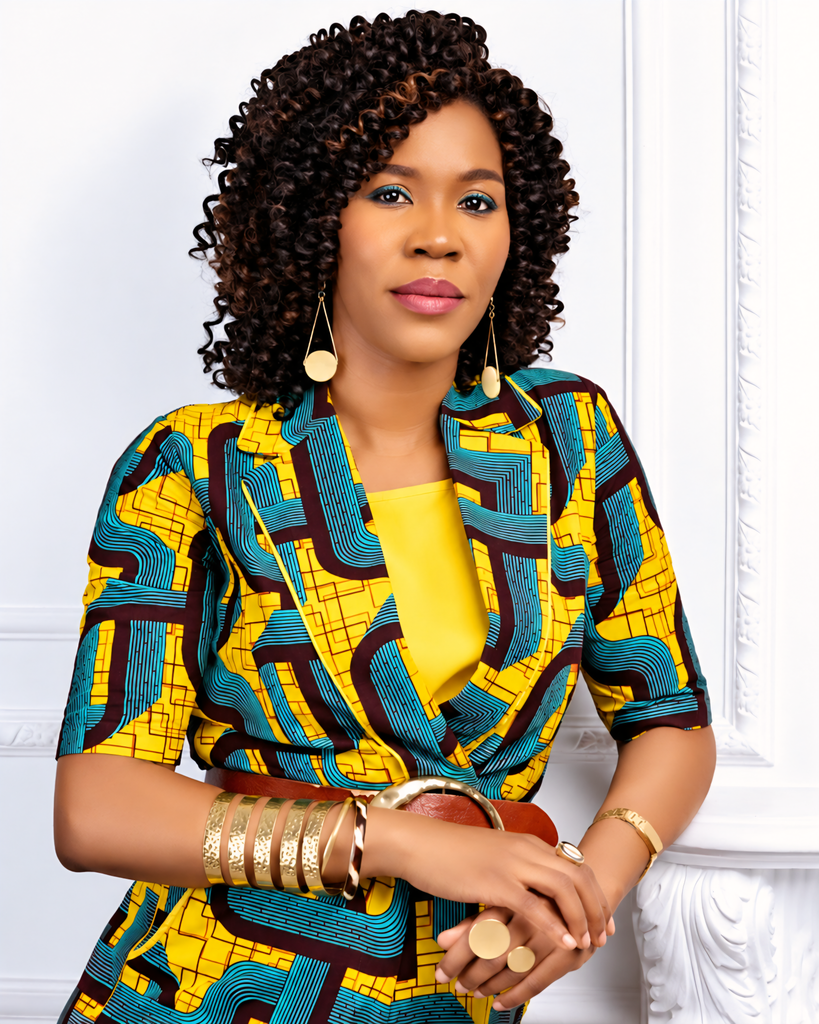
Dr. Mutebi has held major leadership positions within African and international cancer organisations.
She has served as President of the African Organisation for Research and Training in Cancer (AORTIC), a pan-African multidisciplinary organisation focused on cancer advocacy, research and training.
She has also served as President of the Kenya Society of Haematology and Oncology (KESHO) and on the Board of Directors of the Union for International Cancer Control (UICC).
Her leadership has also included serving as Co-Chair of Kenya’s National Cancer Taskforce and Chair of the Commonwealth Taskforce for the Elimination of Cervical Cancer.
She has contributed to multiple Lancet commissions, including work focused on Women, Power and Cancer, Cancer in Sub-Saharan Africa and Breast Cancer.
This breadth of responsibility reflects an important evolution.
Dr. Mutebi is no longer simply treating individual patients.
She is helping influence the systems that determine how entire populations experience cancer.
The Fight Against Late Diagnosis
One of the issues she has repeatedly highlighted is delayed cancer diagnosis.
Through the Africa Breast Cancer Council, she has advocated for reducing the time women spend moving from recognising symptoms to receiving a diagnosis.
Her warning is stark:
“Most African women with breast cancer are diagnosed too late.”
Behind those words are thousands of individual stories.
Women who ignored a lump because they were afraid.
Women who lacked access to specialist care.
Women who faced financial barriers.
Women who encountered misinformation.
Women who travelled long distances to reach treatment.
And families who sometimes discovered cancer only when it had already progressed.
Dr. Mutebi’s work seeks to change that narrative.
A Doctor Who Believes in Hope
One of the most memorable themes in Dr. Mutebi’s public advocacy is hope.
At a 2024 Africa cancer-care forum, she spoke about moving away from the old narrative that cancer in Africa automatically meant death.
“I’m in the hope business.”
Those words capture an important part of her philosophy.
Hope is not pretending that cancer is easy.
Hope is not ignoring the inequalities that exist.
Hope is believing that better systems can be built.
That research can improve treatment.
That earlier diagnosis can save lives.
That women can be empowered to recognise symptoms.
That African researchers can generate African evidence.
That African doctors can innovate.
And that patients deserve more than survival—they deserve quality of life and dignity.
The Humanitarian Recognition
In 2024, Dr. Mutebi received the ASCO Humanitarian Award, one of the most significant recognitions of her career.
The American Society of Clinical Oncology recognised her for humanitarian and community service and for contributions extending beyond her clinical, research and educational responsibilities. She became one of the African oncology leaders to receive this prestigious honour.
The award reflects something important.
Her contribution cannot be measured solely in publications or surgical procedures.
It is measured in service.
In advocacy.
In mentorship.
In innovation.
In leadership.
And in her commitment to improving the lives of patients.
Other Major Recognition
The ASCO Humanitarian Award is part of a growing list of honours associated with her career.
Global Health Catalyst Distinguished Leadership Award
In 2023, Dr. Mutebi received the Global Health Catalyst Distinguished Leadership (LMIC) Award, recognising her leadership in global health and her contribution as a leading breast cancer surgeon in Africa.
Recognition Among Oncologys Influential Leaders
In 2025, she was listed among OncoDaily’s 100 Most Influential People in Oncology, further reflecting her growing international influence.
But perhaps the most meaningful aspect of her recognition is that it has consistently followed work rooted in service.
She has not appeared on these platforms simply because she occupies prestigious positions.
She has been recognised because she has used those positions to push for change.
Dr. Miriam Mutebi — The Author
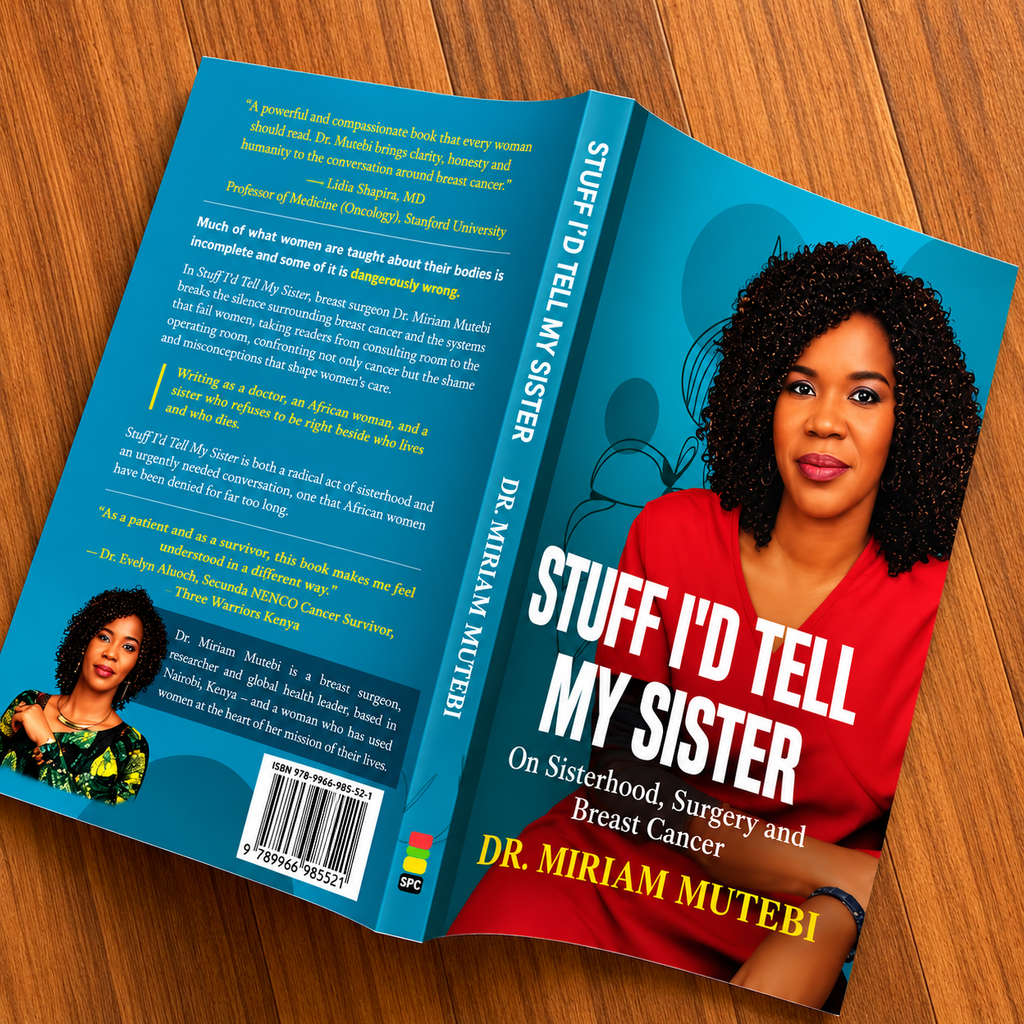
In 2026, Dr. Mutebi entered another chapter of her career with the publication of:
Stuff I’d Tell My Sister: On Sisterhood, Surgery & Breast Cancer
The book draws on her experience of spending more than a decade as a breast surgeon and caring for women through some of the most difficult moments of their lives. In announcing the book, Dr. Mutebi described it as something different from a conventional medical textbook—a book intended to speak directly to women facing fear, uncertainty and misinformation around breast cancer.
The significance of this book extends beyond publishing.
Doctors see stories that most people never see.
They sit beside women when diagnoses are delivered.
They hear fears that patients may never tell anyone else.
They witness families negotiating difficult decisions.
And they see how medical information can either empower people or overwhelm them.
By turning those experiences into accessible storytelling, Dr. Mutebi is extending her work beyond the clinic.
The surgeon becomes a storyteller.
And the story becomes another form of care.
Her Contribution to Books and Global Knowledge
Dr. Mutebi’s writing has also appeared in academic books and scholarly works.
She contributed the chapter “Gender Equity in Academia: Thriving as a Clinician-Scientist, Establishing Partnerships, and Driving Policy for Change in the Kenya Context” to Springer’s Transforming Global Health Partnerships, published in 2024.
She also authored the chapter “Health Professions Education” in Cancer Systems and Control for Health Professionals, published by Wiley in 2025.
These contributions reinforce a recurring theme throughout her career:
The future of African healthcare depends on both excellent clinicians and strong systems for educating, mentoring and retaining them.
The Dream to Take Breast Care Beyond the City
Perhaps one of the most unusual dimensions of Dr. Mutebi’s vision is her pursuit of a pilot’s licence.
Why?
Because she wants to explore ways of extending breast-care services to marginalised communities that are geographically distant from specialist care.
It is a remarkable idea.
A surgeon learning to fly so that distance becomes less of a barrier to healthcare.
The symbolism is powerful.
When communities cannot easily reach the specialist, perhaps the specialist must find new ways to reach the communities.
That is innovation driven by purpose.

Women Power Africa: Why Dr. Miriam Mutebi Matters
The Women Power Africa tribute is ultimately not simply about celebrating an accomplished woman.
It is about celebrating women who use their success to create collective progress.
Dr. Miriam Mutebi represents that ideal.
She broke into a field where women were historically underrepresented.
She became the first female breast surgeon in Kenya.
But she did not stop at being first.
She helped build platforms for women surgeons.
She advocates for women affected by cancer.
She contributes to research on gender and health equity.
She participates in global policy conversations.
She mentors the next generation.
And she continues to ask how healthcare systems can better serve people who are too often left behind.
That is leadership.
The Leadership Lesson in Her Story
There is a powerful lesson hidden inside Dr. Mutebi’s career.
You do not have to choose between excellence and compassion.
You can be a world-class surgeon and still listen.
You can be a researcher and still care deeply about individual stories.
You can lead institutions and still mentor one person at a time.
You can receive international recognition and still remain focused on the patient sitting in front of you.
And you can become the first without making the journey about yourself.
The most powerful leaders understand that their breakthrough is not complete until someone else can walk through the door more easily because they opened it.
A Legacy Bigger Than Medicine
Dr. Miriam Mutebi’s legacy is still being written.
But several chapters are already clear.
She is a pioneer.
She is a surgeon.
She is a scientist.
She is an educator.
She is an author.
She is a humanitarian.
She is a mentor.
She is a cancer advocate.
She is a health-policy leader.
And, above all, she is an African woman who has chosen to use expertise as a vehicle for service.
Her journey demonstrates what happens when one person refuses to accept that “this is how things have always been done.”
She entered surgery.
She challenged expectations.
She developed specialist expertise.
She brought advanced reconstruction to East Africa.
She researched the barriers facing African women.
She helped shape cancer policy.
She built networks for women surgeons.
She raised the African cancer story on international platforms.
And now, through her book, she is bringing the human side of breast cancer directly to readers.
The Women Power Africa Tribute
Dr. Miriam Mutebi, your story is a reminder that being first is not the end of the journey.
Being first means carrying the responsibility to leave the door open.
To mentor.
To teach.
To advocate.
To innovate.
To challenge.
To serve.
To make the road easier for the woman coming behind you.
Your career shows that African women do not have to wait for permission to lead in science, medicine, surgery, research or policy.
They can build.
They can innovate.
They can publish.
They can operate.
They can teach.
They can lead institutions.
They can influence global policy.
And they can change the story of healthcare on an entire continent.
Perhaps the most fitting description of your leadership is the one you gave yourself:
“With being the first, in any position, there is additional pressure on yourself to ensure that you are not the last.”
That is more than a quote.
It is a philosophy.
It is a leadership model.
And it is a legacy.
Dr. Miriam Mutebi — the pioneer who became a pathway.
The surgeon who became an advocate.
The researcher who became a policy voice.
The woman who is helping Africa imagine a better future for cancer care.
Women Power Africa salutes you.