A Story of Academic Excellence, Scientific Innovation, Courage and the Determination to Make Space for Others in STEM
There are careers that inspire admiration, and then there are journeys that redefine what people believe is possible.
Dr. Wendy A. Okolo belongs to the latter category.
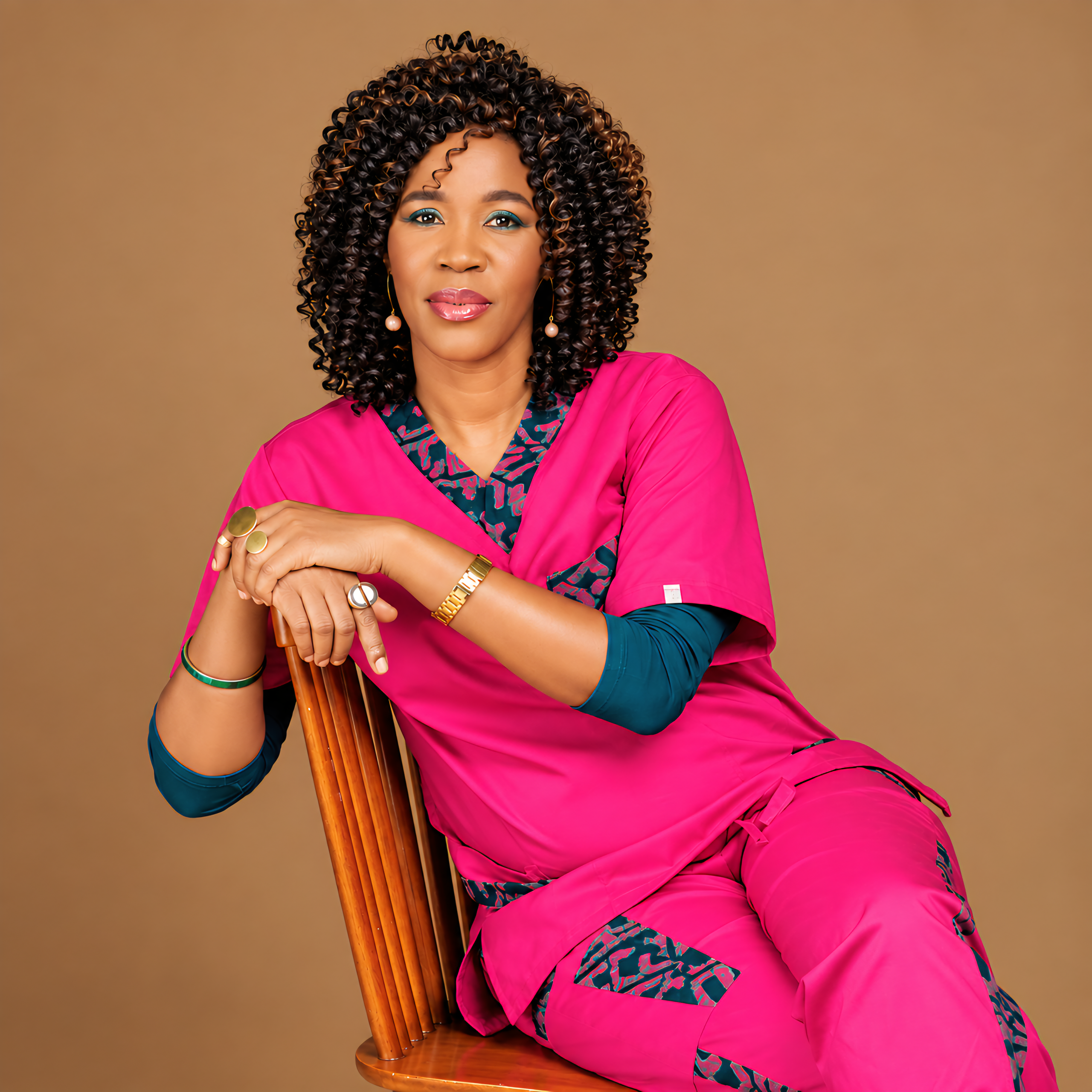
A Nigerian-born aerospace engineer, researcher, author and STEM advocate, Dr. Okolo has built an extraordinary career at the intersection of aerospace engineering, advanced flight systems, research, technology and education. Her journey has taken her from classrooms in Lagos to the laboratories of the University of Texas at Arlington, the research environment of the U.S. Air Force and Lockheed Martin, and ultimately to NASA Ames Research Center in Silicon Valley.
At just 26 years old, she became the first Black woman to earn a Ph.D. in Aerospace Engineering from the University of Texas at Arlington—a milestone that represented not only personal academic excellence, but also a breakthrough in a field where Black women have historically been underrepresented.
But Dr. Okolo’s story is about much more than becoming the first.
It is about refusing to accept limitations.
It is about turning curiosity into expertise.
It is about understanding that excellence is not simply about reaching the highest position—it is also about using that position to open doors for those coming behind you.
And perhaps most importantly, it is about her philosophy that “everything is for everyone.”
The Girl From Nigeria Who Dreamed Of Engineering
Dr. Wendy Okolo was born and raised in Nigeria, where her interest in science and engineering began early.
She attended St Mary’s Primary School before continuing her education at Queen’s College in Lagos, one of Nigeria’s prominent girls’ schools. Her early academic environment helped establish a foundation for the intellectual curiosity and discipline that would later define her career.
According to Dr. Okolo, her mother envisioned her becoming an engineer even before Wendy fully understood what engineering meant. She has recalled that she knew from a young age that she wanted to become an engineer, although she had not initially decided which branch of engineering she would pursue.
That question would eventually be answered through her fascination with aerospace.
She chose a discipline that demands an extraordinary combination of mathematics, physics, creativity, systems thinking and problem-solving.
Aerospace engineering.
It would become the foundation of a remarkable career.
Crossing Continents In Pursuit Of Excellence
Dr. Okolo continued her education in the United States, enrolling at the University of Texas at Arlington (UTA) to study aerospace engineering.
In 2010, she earned her Bachelor of Science in Aerospace Engineering, graduating with honours.
But her undergraduate years were about far more than obtaining a degree.
She immersed herself in research, internships, leadership and professional development.
As an undergraduate, she served as president of the Society of Women Engineers at UTA, gaining experience in leadership while simultaneously developing her technical expertise.
She also benefited from scholarships and academic opportunities that helped support her journey.
Dr. Okolo has spoken about how even relatively modest scholarships could make a meaningful difference to students, helping with textbooks, materials and opportunities that might otherwise be financially difficult to access.
Her experience became an early lesson in the power of opportunity.
Talent matters.
Hard work matters.
But access to opportunity matters too.
From University Research To The World Of Aerospace
While still a student, Dr. Okolo gained valuable industry experience through internships.
She worked with Lockheed Martin, including on NASA’s Orion spacecraft, the crew exploration vehicle designed to support human exploration beyond low Earth orbit. Her internships exposed her to systems engineering and mechanical engineering work associated with spacecraft development.
These experiences helped transform classroom theory into practical engineering.
She was not simply learning about aerospace systems.
She was beginning to work on them.
Her undergraduate research in flight dynamics, guidance, navigation and control also played an important role in shaping the direction of her future doctoral research.
The young engineer was discovering that the questions that fascinated her academically could also have real-world consequences for aviation and space exploration.
At 26, She Made Academic History
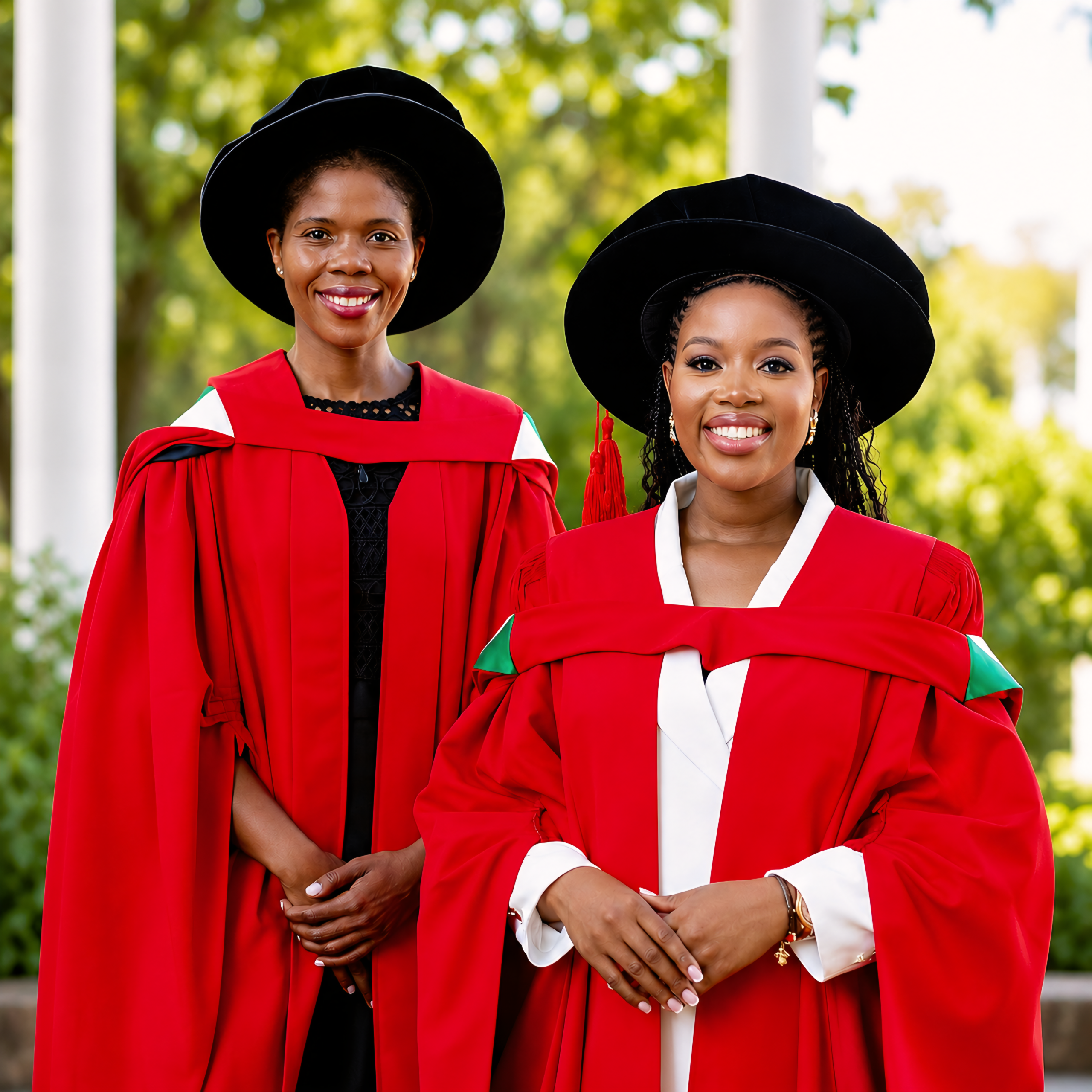
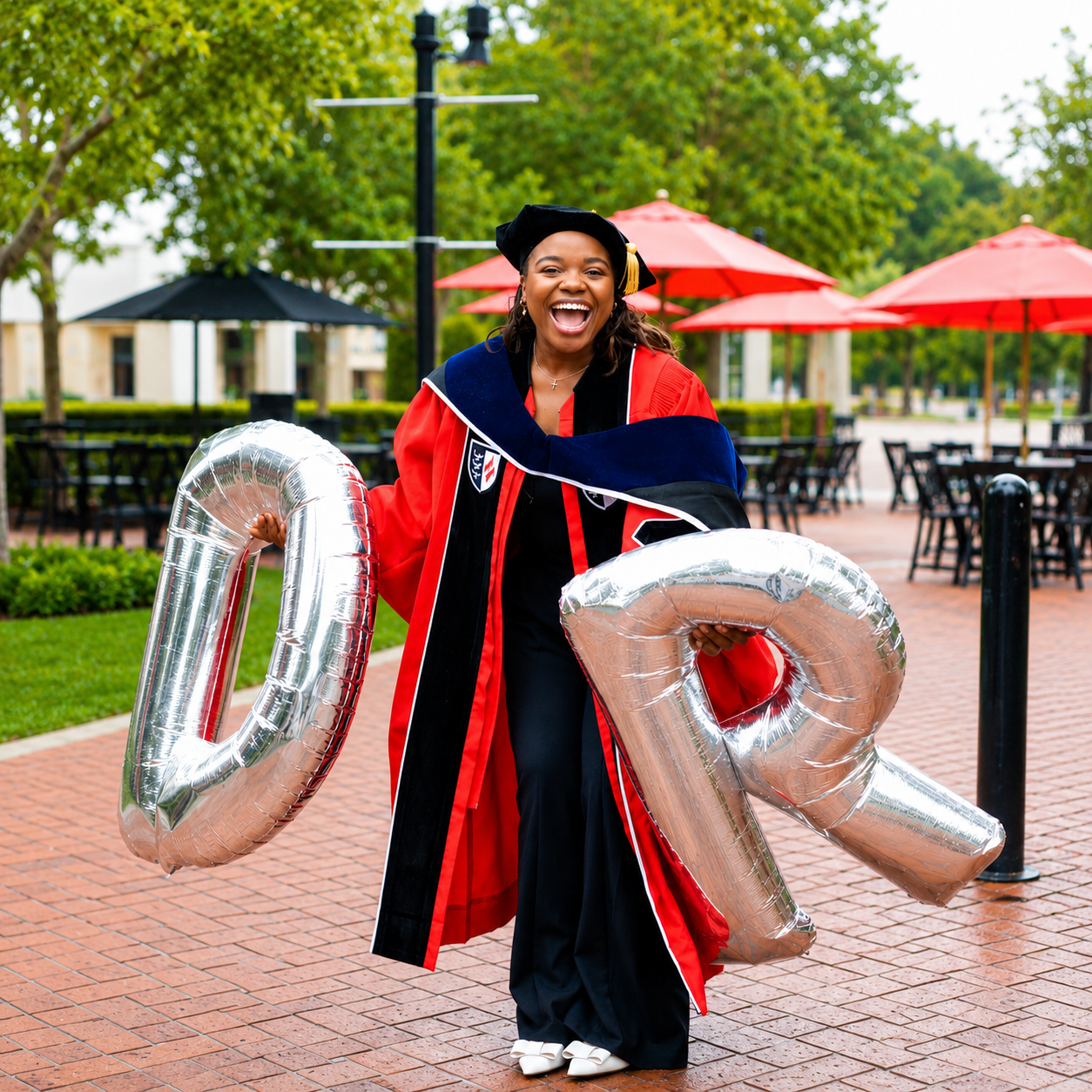
In May 2015, Dr. Wendy Okolo earned her Ph.D. in Aerospace Engineering from the University of Texas at Arlington.
She was only 26 years old.
More significantly, she became the first Black woman to obtain a Ph.D. in aerospace engineering from UTA.
This was not simply a personal academic achievement.
It was a historic milestone.
Her doctoral research focused on aircraft formation flight and the potential fuel-saving benefits of flying aircraft in formation. Her research examined alternative trimming methods and flight-control approaches that could help reduce drag and improve fuel efficiency.
Her graduate studies received support from several prestigious programmes and organizations, including:
- The U.S. Department of Defense National Defense Science and Engineering Graduate Fellowship
- The Zonta International Amelia Earhart Fellowship
- The American Institute of Aeronautics and Astronautics
- The Texas Space Grant Consortium
- The University of Texas at Arlington
Her academic achievement demonstrated what happens when intellectual curiosity meets discipline, mentorship, opportunity and relentless effort.
The Researcher Who Wanted Aircraft To Fly More Efficiently
Dr. Okolo’s research has consistently focused on a deceptively simple but technically complex question:
How can we make aerospace systems safer, smarter and more efficient?
During her graduate research, she worked with the U.S. Air Force Research Laboratory (AFRL) at Wright-Patterson Air Force Base.
There, she conducted research into aircraft formation flight, including techniques designed to exploit aerodynamic benefits between aircraft and potentially reduce fuel consumption.
Her work went beyond theoretical modelling.
The concepts were subjected to flight testing by the U.S. Air Force, demonstrating the potential for practical fuel-efficiency gains using existing and new aircraft.
She also gained experience with Lockheed Martin’s Advanced Development Programs, widely known as Skunk Works, where she worked on performance-optimizing flight control techniques for the F-35C Joint Strike Fighter associated with the U.S. Naval Air Systems Command.
These experiences positioned her at the intersection of research, national aerospace programmes and advanced flight technology.
The Journey To NASA
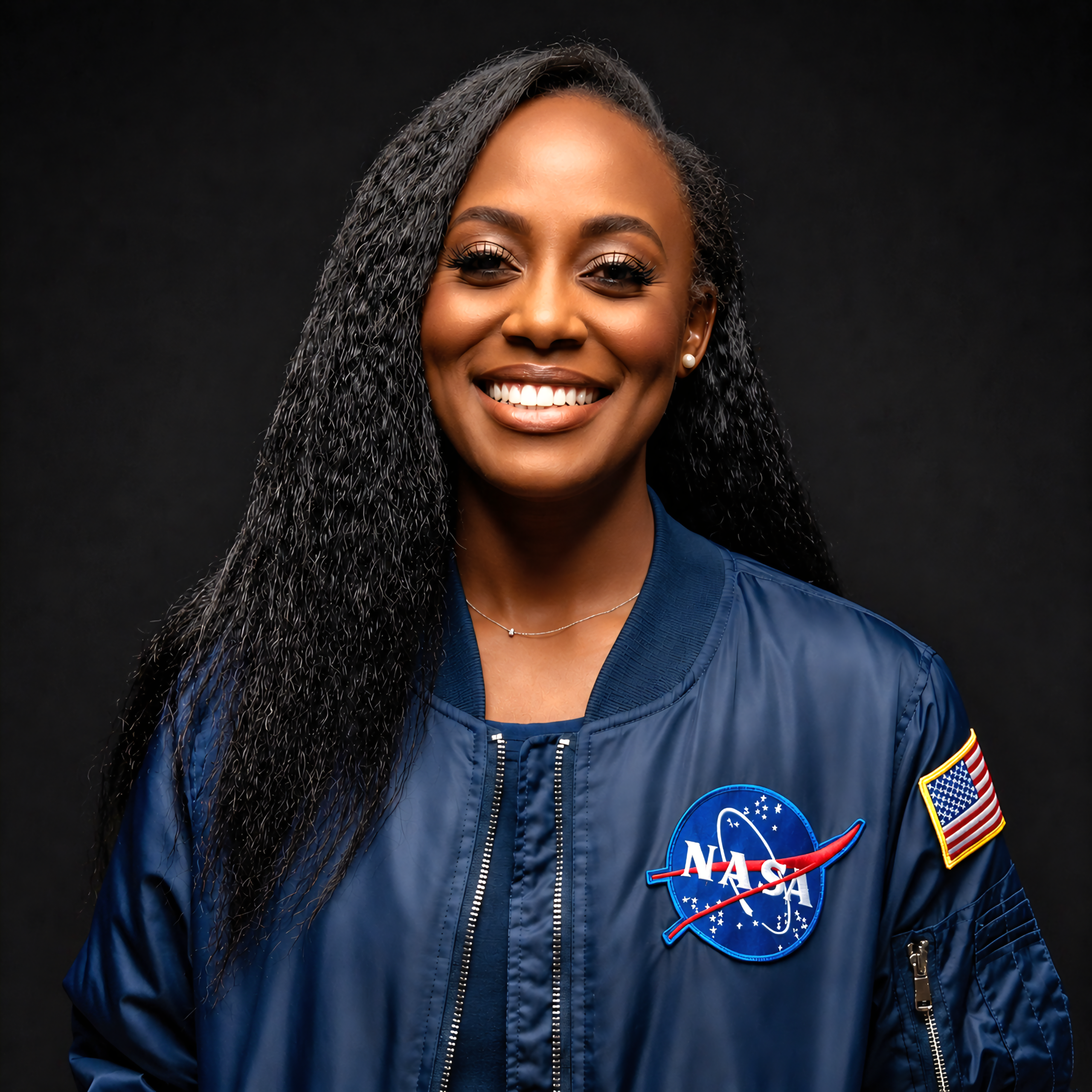
In 2016, Dr. Okolo joined NASA Ames Research Center in California’s Silicon Valley.
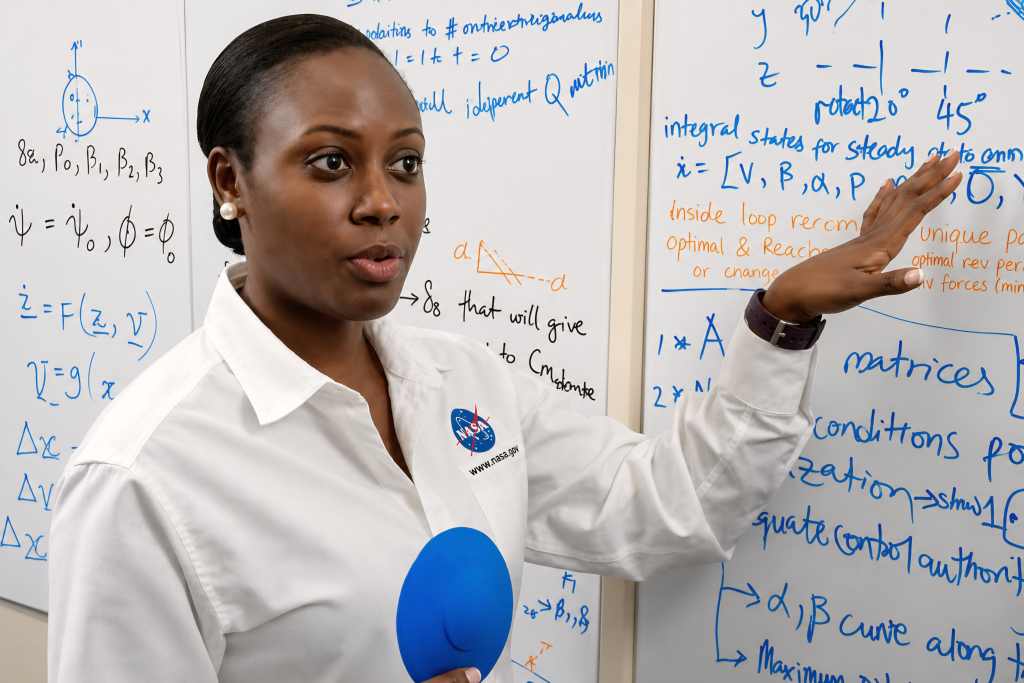
At NASA, she became an aerospace research engineer in the Intelligent Systems Division, working on technologies connected to flight dynamics, controls, systems health monitoring and autonomous aerospace systems.
Her work has involved some of the most challenging questions facing modern aviation:
How can autonomous and unmanned vehicles operate safely in increasingly complex airspace?
How can aerospace vehicles be controlled more precisely?
How can emerging technologies improve flight safety and performance?
Her NASA career has included leadership and technical responsibilities across major research initiatives.
She served as an Associate Project Manager for NASA’s System-Wide Safety project, focused on developing capabilities that can support the safe operation of unmanned vehicles in the national airspace.
She has also led controls work connected to NASA’s Pterodactyl project, an Early Career Initiative aimed at advancing guidance and control technologies for deployable entry vehicles and precision landing.
NASA’s work involving Dr. Okolo has included research into monitoring, prediction and mitigation capabilities for unmanned aerial systems, as well as advanced control techniques for aerospace vehicles.
Innovation That Can Change How Space Vehicle Fly
One of the most significant dimensions of Dr. Okolo’s work is her contribution to aerospace control technology.
Her expertise includes flight dynamics, vehicle controls, autonomous vehicle safety and systems health monitoring.
Her work has also contributed to patented aerospace technology.
A U.S. patent associated with Dr. Okolo and NASA concerns aerospace vehicle entry flightpath control. The technology explores methods of controlling the flight path of an aerospace entry vehicle using innovative control mechanisms, including aerodynamic control surfaces and other techniques.
The significance of this kind of research goes beyond technical achievement.
Advanced flight-control technology can potentially contribute to missions where precision, mass efficiency, safety and maneuverability are critical.
This is the kind of engineering that operates behind the scenes—but can influence the future of aviation and space exploration.
A Career Recognized By The World
Dr. Okolo’s achievements have attracted significant recognition from NASA, professional organizations, universities and STEM institutions.
Among her notable honours and accolades are:
NASA Exceptional Technology Achievement Medal — 2021
Dr. Okolo was a recipient of the NASA Exceptional Technology Achievement Medal, recognizing significant technological contribution.
NASA Ames Award for Researcher/Scientist — 2020
She received the NASA Ames Award for Researcher/Scientist, recognizing her research contributions at NASA Ames.
NASA Ames Early Career Researcher Award — 2019
Dr. Okolo became the first woman recipient of the NASA Ames Early Career Researcher Award. NASA lists her among the award’s 2019 recipients.
Black Engineer of the Year Award — Most Promising Engineer in U.S. Government
In 2019, she received the Black Engineer of the Year Award for Most Promising Engineer in U.S. Government, one of the honours that brought wider attention to her accomplishments as an aerospace researcher.
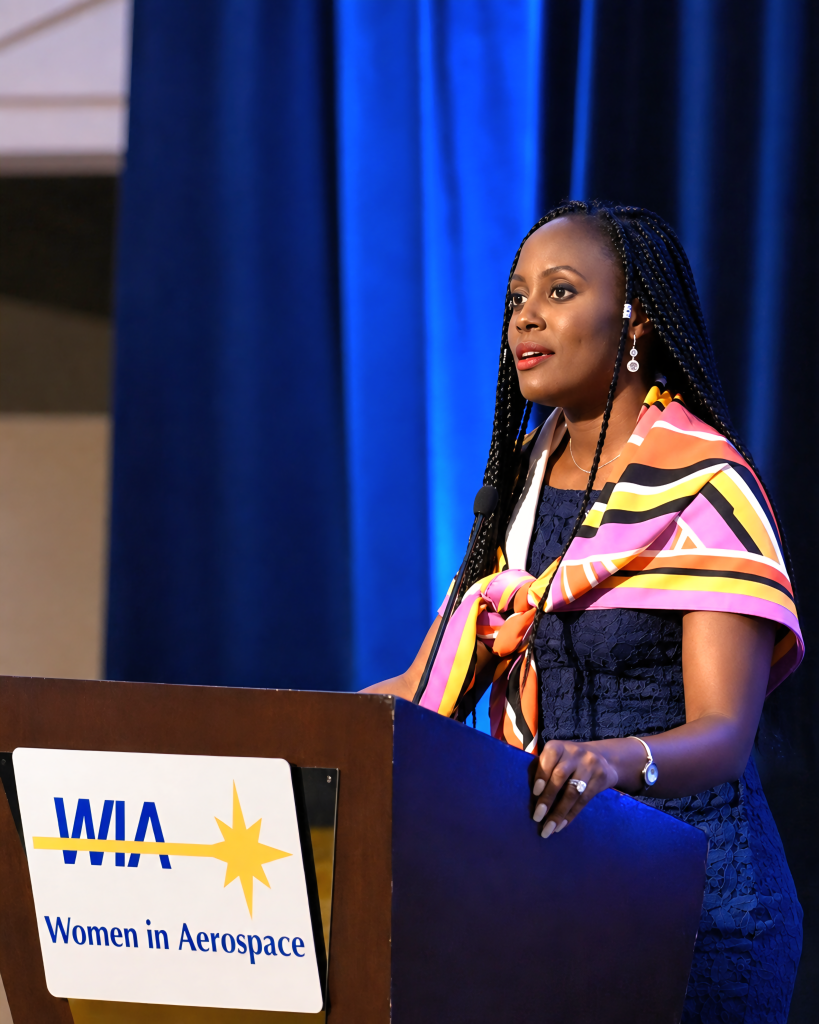
Women in Aerospace Award for Initiative, Inspiration & Impact — 2019
She was also honoured with the Women in Aerospace Award for Initiative, Inspiration & Impact, recognizing not only her technical achievements but the broader influence of her work.
UT Arlington Distinguished Recent Graduate Award — 2019
Her alma mater recognized her with the University of Texas at Arlington Distinguished Recent Graduate Award.
AIAA John Leland Atwood Graduate Award
Her graduate work was also recognized through the American Institute of Aeronautics and Astronautics John Leland Atwood Graduate Award.
Women of Color in STEM Recognition
Her research achievements have also received recognition from Women of Color in STEM.
Resolution of Commendation
Her academic and research contributions were recognized through a Resolution of Commendation from the Tarrant County Court of Texas.
These accolades tell a story of excellence across multiple dimensions—academic achievement, engineering innovation, research, leadership and service.
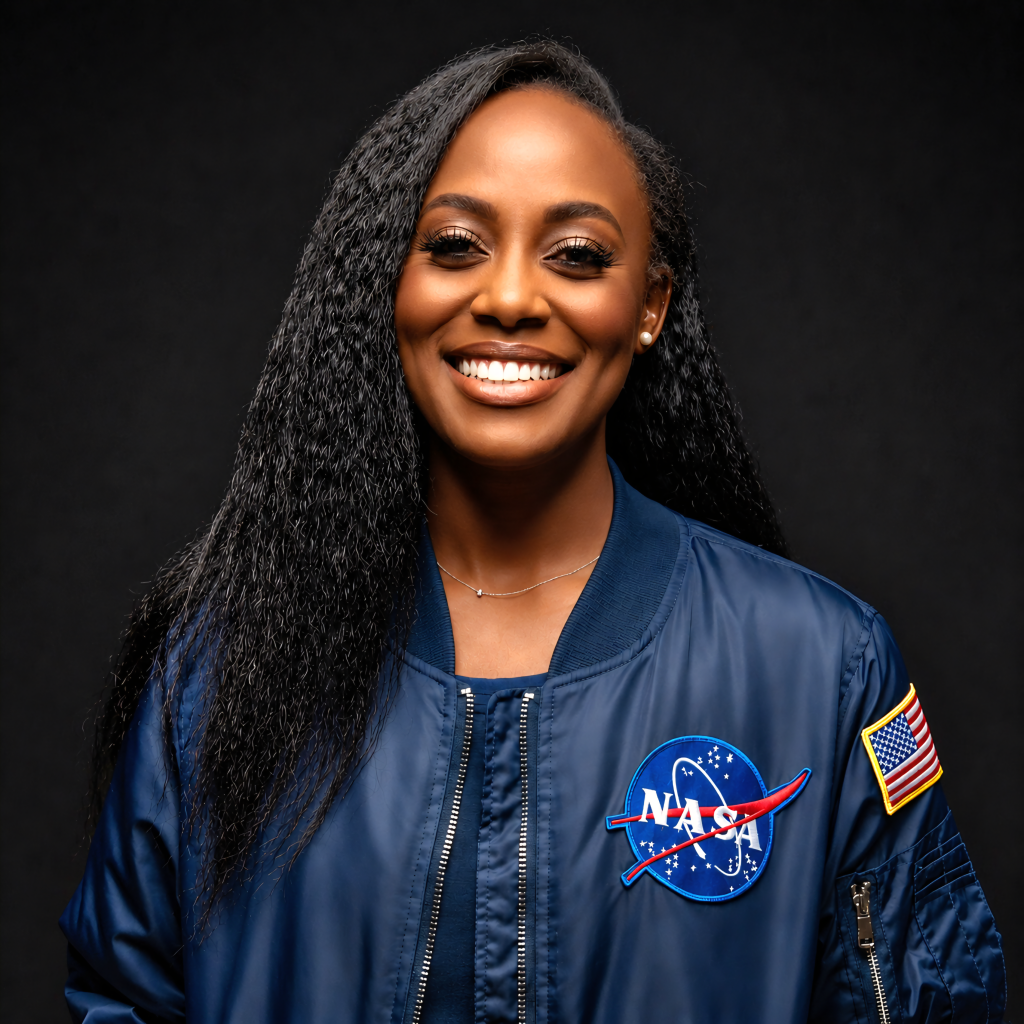
More Than A Scientist: A Champion For STEM
Perhaps one of the most inspiring aspects of Dr. Okolo’s journey is that she has not treated her success as the end of the story.
She has used her experiences to encourage young people—particularly girls and those who have historically been underrepresented in STEM—to see themselves as capable of belonging in scientific and technical spaces.
Her advocacy focuses on expanding participation and opportunity in science, technology, engineering and mathematics, while helping students and professionals navigate the pathways from education into research, innovation and technology careers.
She has also served as a Special Emphasis Programs Manager for Women at NASA Ames, reflecting her commitment to creating greater opportunities for women in STEM.
Her message is powerful because it comes from lived experience.
She knows what it means to enter a demanding field.
She knows what it means to be different from many of the people around you.
And she knows that sometimes the biggest barrier is not ability—but whether someone has been taught to believe that they belong.
“Everything Is For Everyone”
One of Dr. Okolo’s most memorable messages is:
“Everything is for everyone.”
It is a simple statement with profound implications.
It challenges the idea that certain careers belong to certain types of people.
It challenges the notion that engineering is only for men.
It challenges the assumption that aerospace belongs exclusively to people from particular backgrounds.
And it challenges young people to reconsider the boundaries they place around their own potential.
Dr. Okolo’s life is evidence of the philosophy.
A girl from Nigeria could become an aerospace engineer.
A young Black woman could earn a Ph.D. in aerospace engineering at 26.
A researcher could work on aircraft formation flight, advanced control systems and spacecraft technologies.
And an African-born woman could build a career contributing to NASA’s work at the frontier of aviation and space technology.
“Do It Well And Do It Now.”
In reflecting on the lessons she learned throughout her journey, Dr. Okolo has offered another powerful principle:
“Do it well and do it now.”
The message captures an important dimension of her success.
Excellence is rarely created in one dramatic moment.
It is built through ordinary decisions repeated consistently:
Studying when nobody is watching.
Preparing when there is no immediate reward.
Asking questions.
Seeking mentors.
Applying for opportunities.
Accepting internships.
Conducting research.
Writing papers.
Learning from failure.
Showing up again.
And doing the work to the highest standard possible.
Her journey demonstrates that extraordinary careers are often built through ordinary acts of consistency.
“There’s A Lot You Can Attempt Before You Quit.”
Another lesson Dr. Okolo has shared with the next generation is:
“Everything is for everyone and there’s a lot you can attempt before you quit.”
This is perhaps one of the most important messages young people can hear.
Failure does not automatically mean that the dream is impossible.
A rejection is not necessarily a verdict.
A difficult subject does not mean you do not belong.
A challenging research problem does not mean you are incapable.
Sometimes, the difference between people who eventually succeed and those who stop is simply the willingness to attempt one more thing.
One more application.
One more experiment.
One more conversation.
One more opportunity.
One more attempt.
Her Book: “Learn To Fly”
Dr. Okolo eventually transformed her personal journey into a resource for others through her book:
Learn To Fly: On Becoming a Rocket Scientist
The book chronicles her path toward becoming an aerospace engineer and combines personal experiences with practical guidance for students pursuing STEM and academic excellence.
The book covers topics including:
- Academic success
- Scholarships
- Networking
- Time management
- Extracurricular activities
- Professional development
- STEM education
- Navigating challenges
- Building confidence
- Creating a pathway toward one’s ambitions
But its central message is bigger than aerospace.
It is about learning how to pursue an ambitious dream before you feel completely ready.
It is about understanding that your background does not have to determine the ceiling of your ambition.
And it is about learning to “fly” before you quit.
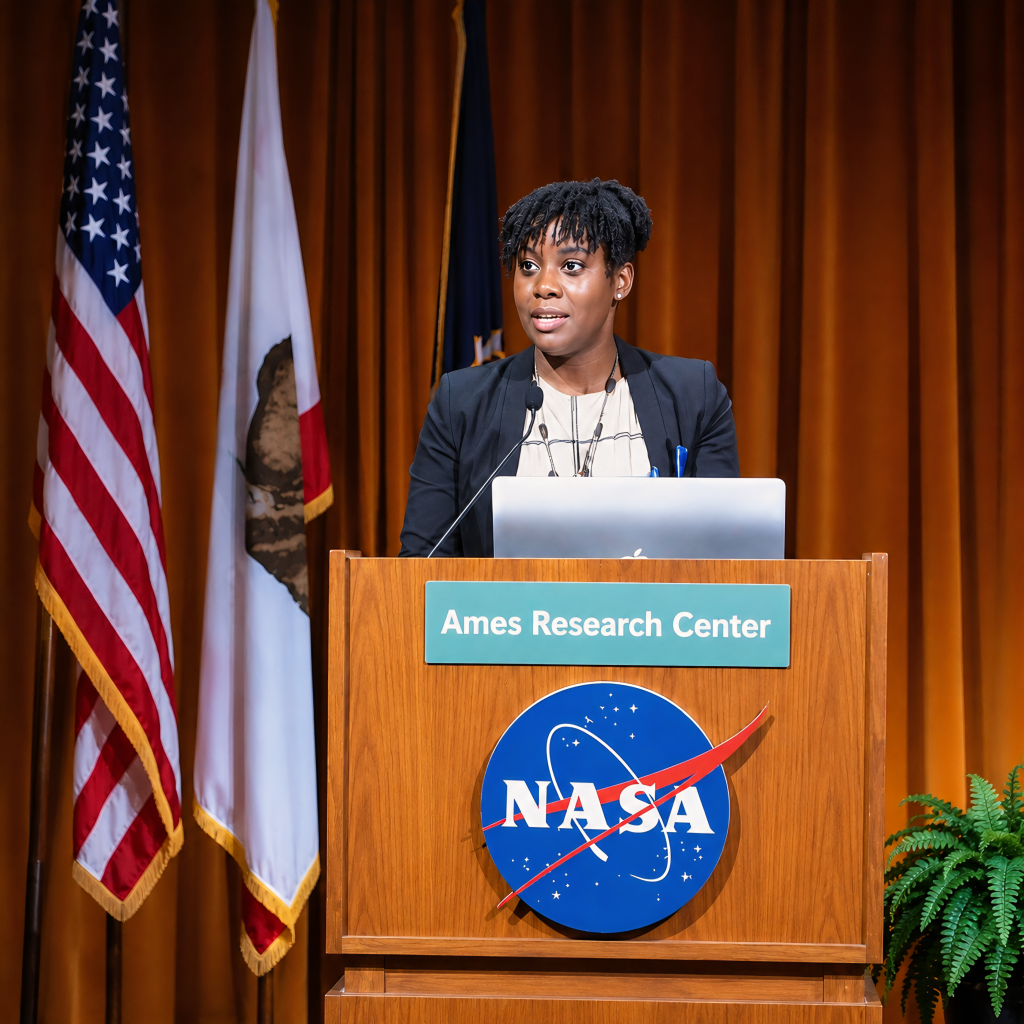
A Scientist Who Also Tells Stories
Dr. Okolo’s ability to communicate complex scientific ideas to broader audiences has become another dimension of her influence.
She has delivered presentations on subjects ranging from aerospace vehicle control to STEM success and has participated in professional forums, educational programmes and public speaking engagements.
Her STEM presentations demonstrate that technical excellence and communication can coexist.
Aerospace engineering may involve sophisticated mathematics, control theory and systems engineering—but inspiration can make those fields feel accessible to a young person encountering them for the first time.
That matters.
Because before a young person becomes an engineer, scientist or researcher, they first have to imagine themselves as one.
The Power Of Representation
Dr. Wendy Okolo’s story is particularly significant because representation matters.
When a young African girl sees a woman who looks like her contributing to aerospace research, the message is not merely:
“She succeeded.”
The deeper message is:
“This space can include you too.”
That psychological shift can be transformative.
Representation expands imagination.
Imagination expands ambition.
Ambition creates action.
And action can change generations.
Dr. Okolo therefore represents more than aerospace excellence.
She represents possibility.
A Legacy Beyond The Ph.D.
It would be easy to define Dr. Wendy Okolo by the fact that she became the first Black woman to earn a Ph.D. in aerospace engineering at UTA.
But that would only tell one chapter of her story.
Her broader legacy includes research into aircraft formation flight and fuel efficiency, advanced flight-control systems, autonomous vehicle safety, systems health monitoring and aerospace technologies designed to improve precision and performance.
It includes work with the U.S. Air Force Research Laboratory.
It includes experience with Lockheed Martin’s Skunk Works.
It includes research and leadership at NASA Ames.
It includes technical publications.
It includes patented technology.
It includes awards.
It includes mentorship.
It includes advocacy.
And it includes a book designed to help others navigate the very journey she once travelled herself.
The Lessons From Dr. Wendy Okolo’s Journey
Dr. Okolo’s life offers lessons that extend far beyond aerospace engineering.
1. Never allow stereotypes to define your ambition.
The world may have expectations about who belongs in certain fields.
Your responsibility is not to fit those expectations.
It is to discover what you are capable of becoming.
2. Excellence begins long before recognition arrives.
The awards came later.
The discipline came first.
3. Seek opportunities aggressively.
Internships, scholarships, research opportunities and professional networks all contributed to Dr. Okolo’s development.
Opportunities rarely find everyone equally.
Sometimes you have to go looking for them.
4. Let curiosity guide you.
Her fascination with engineering eventually led her into aerospace.
Curiosity became a career.
5. Representation is responsibility.
Once you break through a barrier, consider reaching back to help someone else through it.
6. Your first achievement does not have to be your last.
Becoming the first Black woman to earn a Ph.D. in aerospace engineering was historic.
But Dr. Okolo continued building.
7. Consistency compounds.
Her own advice—“Do it well and do it now”—captures the importance of disciplined execution.
8. Do not quit too early.
There may be many possibilities you have not yet attempted.
Why Dr. Wendy Okolo’s Story Matters
The world needs engineers.
It needs scientists.
It needs researchers.
It needs innovators.
But it also needs people who can convince the next generation that these careers are possible.
Dr. Wendy Okolo is doing both.
She is contributing to advanced aerospace research while simultaneously helping reshape the narrative around who can participate in STEM.
Her journey demonstrates that an ambitious dream does not have to remain a childhood fantasy.
A girl can dream of engineering.
She can cross continents to pursue it.
She can excel academically.
She can conduct research.
She can earn a doctorate.
She can enter the aerospace industry.
She can contribute to NASA.
She can invent.
She can lead.
She can write.
She can mentor.
And she can inspire an entirely new generation to look at the sky and believe they belong there.
From Lagos To The Stars
Dr. Wendy Okolo’s journey is ultimately a story about possibility.
- From Lagos to Texas.
- From classrooms to laboratories.
- From student researcher to aerospace engineer.
- From doctoral candidate to history-making scholar.
- From researcher to NASA project leader.
- From technical expert to STEM advocate and author.
Her story reminds us that the distance between where you begin and where you ultimately arrive can be enormous.
But distance should never be confused with impossibility.
The sky is not the limit when your curiosity keeps asking what lies beyond it.
Dr. Okolo has spent her career exploring that question—literally and figuratively.
And perhaps her most powerful contribution is not simply the technology she has helped develop.
It is the possibility she represents.
For every young girl wondering whether she belongs in engineering.
For every African student dreaming beyond the boundaries of their immediate environment.
For every Black woman entering a field where she may be one of very few.
For every student who has ever looked at an intimidating subject and wondered whether they were good enough.
Her story says:
You can belong.
You can learn.
You can attempt.
You can excel.
You can lead.
And when the opportunity comes—
learn to fly.
Dr. Wendy Okolo — Selected Achievements at a Glance
Profession: Aerospace Research Engineer, Researcher, Author and STEM Advocate
Specialization: Flight dynamics, vehicle controls, autonomous air vehicle safety and systems health monitoring
Current/Recent Professional Role: Associate Project Manager and aerospace research engineer associated with NASA Ames Research Center’s Intelligent Systems Division and System-Wide Safety work
Education:
- Honors Bachelor of Science in Aerospace Engineering — University of Texas at Arlington, 2010
- Ph.D. in Aerospace Engineering — University of Texas at Arlington, 2015
Historic Achievement:
First Black woman to earn a Ph.D. in aerospace engineering from the University of Texas at Arlington, at age 26
Selected Career Experience:
- NASA Ames Research Center
- U.S. Air Force Research Laboratory
- Lockheed Martin Advanced Development Programs / Skunk Works
- NASA Orion spacecraft internship experience
Selected Awards & Honours:
- NASA Exceptional Technology Achievement Medal, 2021
- NASA Ames Award for Researcher/Scientist, 2020
- NASA Ames Early Career Researcher Award, 2019
- Black Engineer of the Year Award — Most Promising Engineer in U.S. Government, 2019
- Women in Aerospace Award for Initiative, Inspiration & Impact, 2019
- UTA Distinguished Recent Graduate Award, 2019
- AIAA John Leland Atwood Graduate Award
- Amelia Earhart Fellowship
- U.S. Department of Defense NDSEG Fellowship
- Texas Space Grant Consortium Fellowship
Innovation: Named inventor on NASA-associated U.S. patent “Aerospace Vehicle Entry Flightpath Control,” granted in 2023.
Author: Learn To Fly: On Becoming a Rocket Scientist
Women Power Africa Tribute
Dr. Wendy Okolo is proof that brilliance has no continent, no gender and no predetermined ceiling.
She is proof that a girl who begins with curiosity can become a scientist.
That a student can become a scholar.
That a researcher can become an innovator.
That an engineer can help shape the future of aviation and space exploration.
And that breaking a barrier is only the beginning.
Her journey from Nigeria to NASA is not simply a story of how high one woman has risen.
It is an invitation to an entire generation to rise higher.
Because everything is for everyone.
And there is still so much to attempt before we quit.
Dr. Wendy Okolo — learning to fly, helping others believe they can fly, and showing the world that the stars are not reserved for a chosen few.
Her story is not only about reaching the stars.
It is about helping others believe they belong among them.
Women Power Africa celebrates Dr. Wendy Okolo for her extraordinary contribution to aerospace engineering, scientific innovation, academic excellence and the advancement of women and underrepresented communities in STEM.
https://www.linkedin.com/in/dr-wendy-a-okolo
Written by : Valentine Zoza
Email : valentine@womenpowerafrica.com
http://www.linkedin.com/in/valentinezoza
Powered by : Women Power Africa
Email : admin@womenpowerafrica.com
http://www.linkedin.com/company/women-power-africa